AI Conference follow up

I read a book today about Biochemistry (30-second Biochemistry) to refresh my memory about proteins to better understand the AlphaFold AI.

I searched the link about Demis Assabis being named among the 100 most influential people by TIMES

https://time.com/collection/time100-ai/6309001/demis-hassabis-ai/

In his new capacity as an AI leader at Google,  they are developing an new type of AI, Gemini that could outperform OpenAI GPT-4.    Gemini is one step further in a larger pursuit of AGI (Artificial General Intelligence).    Using AI to advance science is already here (with AlphaFold, for example).

** interesting point about Gemini, input and output is not just text but other forms of media like images.  *** yet to be released.  (I had make a Hopscotch program I can relate to Gemini).

I could get from videos that there was something wrong with language based AI.  They were trained with text.  They are not grounded.  He explained in this article quite well the problem.  Large language models have this consistent problem with so-called hallucinations or this inclination to pass off guesses as facts.  They try to make models marginally more truthful by using reinforcement-learning techniques.   To fully solve (hallucination) he thinks it’s going to require some other innovations, like fact checking by checking with Google search as a tool.  It needs to better understand what entities are in the world.

He talked to UK and US government officials.  They are up to speed, now about AI policy.  He is optimistic about the situation.

Ethics has always been part of his work in AI.

In the future, they need to come up with the right evaluation benchmarks for capabilities.

We need to do more AI safety research as they want rigorous evaluation and bench marking technologies.
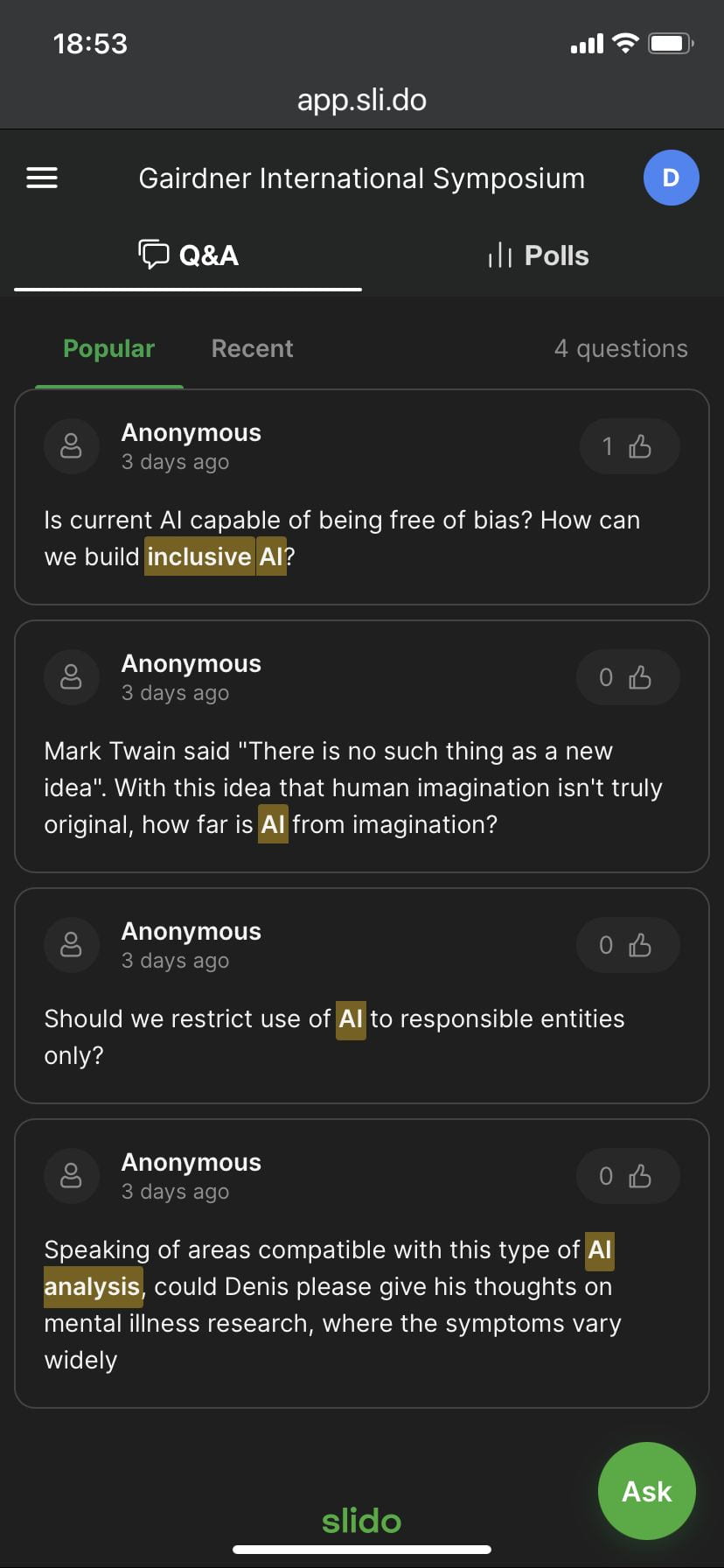
 

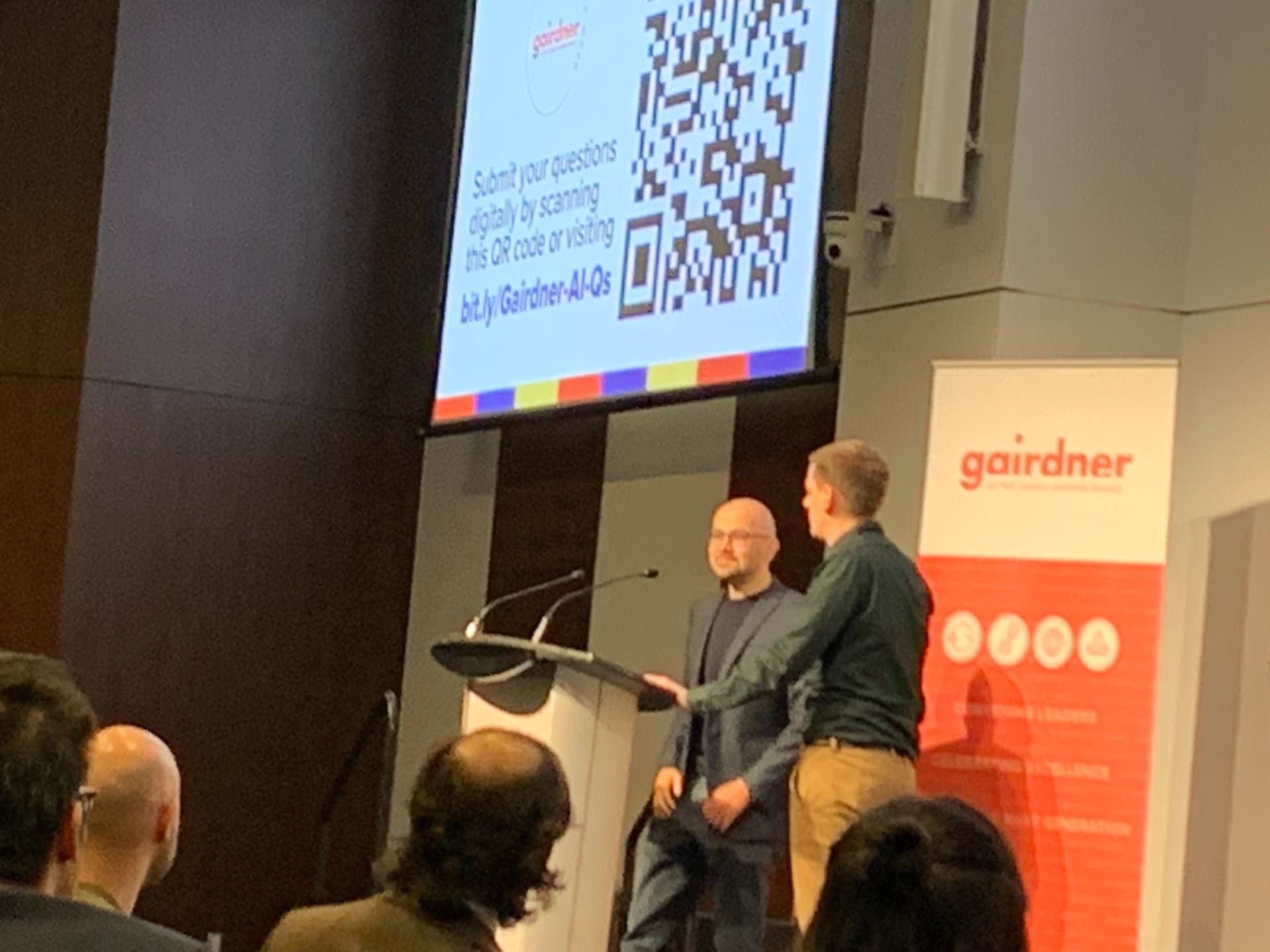
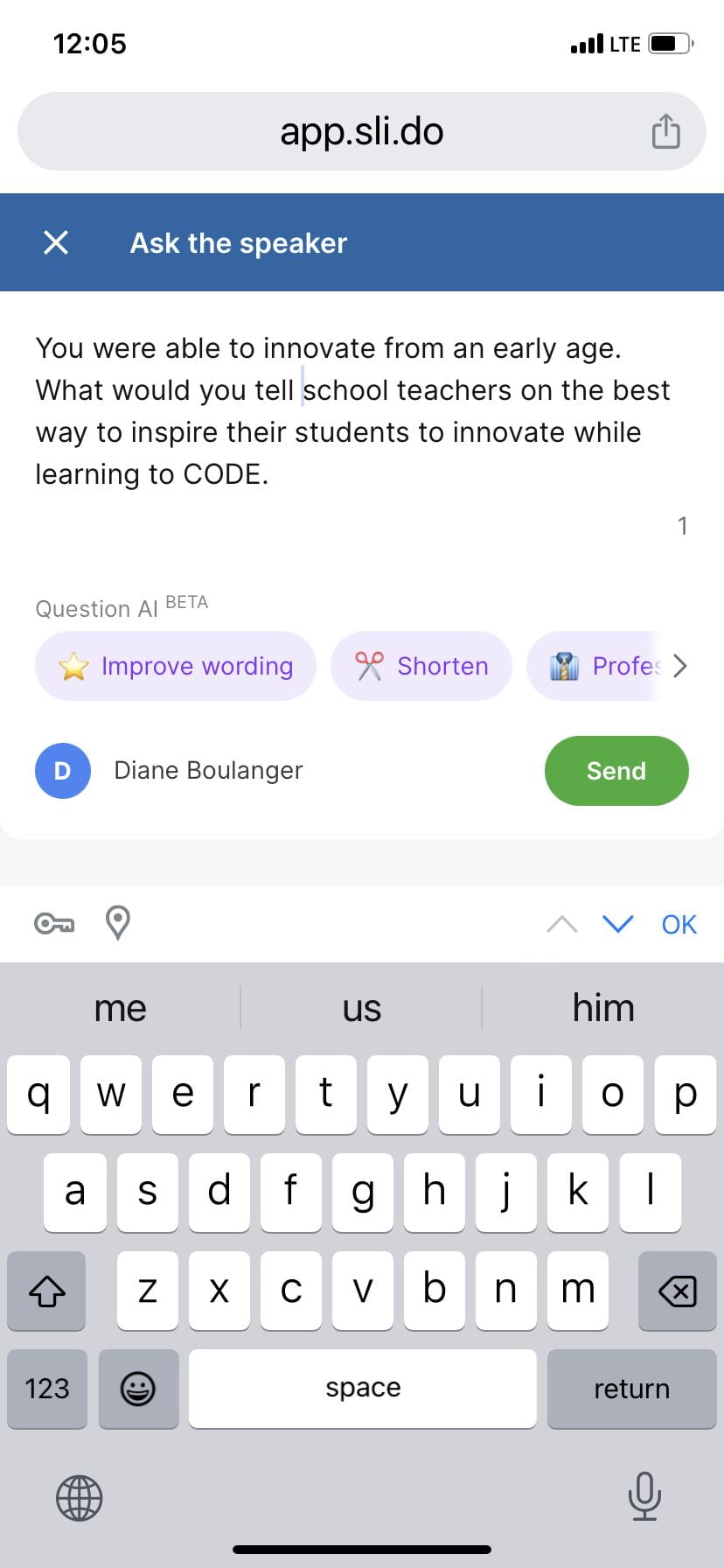
I saw over 20 questions that were asked through the question software.  I was glad that it was my question that was selected.


The Future of AI in science & medicine conference

I attended the conference: the Future of AI in science & medicine

I would like to share some of my notes.

1- Cheryl Arrowsmith 

She uses AlphaFold in her research into chemical probes to revolutionise science and biology medicine.

https://www.target2035.net/

They can be found on X using #Target2035

There is a high need for collaboration and data sharing in the field.  They also need people to test the molecules.

They also participate in the CACHE challenge for critical assessment.

The goal is to lower the cost of making new drugs.

2- Bo Wang

https://wanglab.ai/

Developed scGPT :  toward building a foundation model for single-cell omics.

We develop integrative and interpretable machine learning algorithms that can help clinicians with predictive models and decision support to tailor patients’ care to their unique clinical and genomic traits.

Data is from the Human Cell Atlas at JCoolScience

They have organ specific Foundation Models.

To develop those tools, collaboration is key between computer scientist and biologists.

3- Doina Precup

Their AI is confined to simulations.  The AI train on simulation.  They need to train in the population and it is hard to do.  They need more data.

4 – Artem Babain

His website http://RNNlab.ca is not available online.  But his X handle is:  @RNA_life.

He is one of the 2023 winners of the Gardner Prize.  He was able to predict where the SARS-CoV-2 virus was coming from.   The database:  Sequence Read Archive (or ENA) is available to everyone.  The volume of data is growing exponentially.

He said if there is one thing we should remember from this presentation is that they are the modern library of Alexandria for genetics.

They have a really large amount of data.  They write algorithms to process such a large volume of data.


5- Elaine O Nsoesie, Ph. D. 

She is able to predict obesity from space.

6- Demis Assabis and John Jumper


Links and #hashtag to research further:

https://unfolded.deepmind.com

#unfolded

He created tools to aid scientists.  Here is my question:

How to support the next generation.

It depends on age, of course.  AI is multidisciplinary work.  We need to work and talk with experts in other domains.  We need to learn WHEN to apply AI.

It is currently the easiest time to get involved.

——-

The Gairdner foundation thanks its supporters.


DeepMind’s Demis Hassabis interview on TedTalk

https://www.youtube.com/watch?v=I5FrFq3W25U

Some interesting points to me.

He thinks chess should be part of the school curriculum.  It teaches phenomenal skills.

What would happen if AI just read Wikipedia? The AI would not be grounded as it is not living in the real world.  Some of our assumptions about intelligence may not hold.  AI would not know, for instance that a dog has 4 legs.  ChatGP3 tends to allucinate.

Alphafold’s immediate goal is to solve the protein folding problem.  It’s immediate application is acceleration of drug discovery in designing new molecules and new compounds.

What is the most unsolved problem in your field that you would like to see?

The notion of abstract concepts of conceptual knowledge is quite rudimentary so far.  It’s transfer learning or analogical reasoning in psychology.  We, as humans, do something like this effortlessly in our own brain.  In a domain, find the underlying structure, and apply it to another domain.  AI systems don’t do that in a satisfactory way.

What’s missing is true creativity.  AI can invent new game strategies but cannot invent a game of GO.  Not there yet.

The ultimate goal is to understand the whole universe around us.

A new era of artificial intelligence

There’s another conference about AI that looks fascinating with Demis Hassabis.

Demis Hassabis has been placed in 2017 among the 100 most influent people in the world for his work in artificial intelligence.  He since won several prizes including this years’ (2023) Breakthrough Prize in Life Sciences.

Here’s a podcast with Demis Hassabis:

https://www.youtube.com/watch?v=GdeY-MrXD74

The podcast asks several questions about the future of AI.  He coined the term AGI (Artificial General Intelligence) as the next type of AI that will solve big challenges facing humanity today.  AGI is an artificial general intelligence that mimics the human brain.  The scientific community should be able to develop it in a decade or 2.  Consult the podcast to know more about it.

Fei-Fei Li has been an inspiration for me in my work with Hopscotch.  She invited Demis Hassabis to give a talk.  In this link, the questions at the end of the talk are quite interesting.

https://www.youtube.com/watch?v=KHFmIknP_Hc

One Ph.D. student asked what are the long term perspectives on research core findings help cultivate at deep mind to enable it to continuously innovate for as long as it has.

He mentioned that they use rigorous techniques.  They develop learning systems, not expert systems.  They get inspiration from neuroscience.  They use simulations and games for plateforms.  They choose games.  There’s a lot of untapped talents.

I would perhaps ask him the same question but in the context of teaching primary or high school students.  From his background with chess and GO, I think he would say to focus on games, and on things that are passionate to the children.

My question is:

You personally were able to innovate continuously for a long time, and that from an early age.  What would you tell a group of high school or primary school teachers on the best way to inspire their students to innovate while learning to CODE in school.


The future of AI in Science and Medecine

I am planning to attend the Gairdner conference on October 25.  I reviewed the talks I found online by the various speakers in preparation for the conference.  Here’s a list of the videos from most of the speakers.

Dr. Demis Hassabis.

https://www.youtube.com/watch?v=AU6HuhrC65k


Dr. John Jumper.

https://www.youtube.com/watch?v=p1qjgkqwTdg


Dr. Doina Precup.

https://www.youtube.com/watch?v=L9hbticxiaY


Dr. Bo Wang.

https://www.google.com/search?q=dr+bo+wang+ai+scientist&sca_esv=573232648&rlz=1CAVNCX_enCA1028&biw=1181&bih=540&tbm=vid&sxsrf=AM9HkKkolYJ61YgNGIbuT4MFCxPFzWd82Q%3A1697220482938&ei=gocpZZrjOLH9ptQP0NGVwAI&ved=0ahUKEwiarPb_zvOBAxWxvokEHdBoBSgQ4dUDCA0&uact=5&oq=dr+bo+wang+ai+scientist&gs_lp=Eg1nd3Mtd2l6LXZpZGVvIhdkciBibyB3YW5nIGFpIHNjaWVudGlzdDIFEAAYogRIz35Q0AhYzXdwAngAkAEAmAHlAaABshuqAQYzLjE3LjS4AQPIAQD4AQGoAgrCAgcQIxjqAhgnwgIEECMYJ8ICCBAAGIAEGLEDwgILEAAYigUYsQMYgwHCAgUQABiABMICCxAAGIAEGLEDGIMBwgIHEAAYigUYQ8ICChAAGIAEGBQYhwLCAg0QABiABBgUGIcCGLEDwgIIEAAYywEYgATCAgYQABgWGB7CAggQABgWGB4YE8ICBRAhGKABwgIEECEYFcICCBAhGBYYHhgdwgIHECEYoAEYCogGAQ&sclient=gws-wiz-video#fpstate=ive&vld=cid:6f70e9cb,vid:DmCi5QGfStc,st:0


Prof. Elaine O. Nsoesie

https://www.youtube.com/watch?app=desktop&v=UQG9MrcIa9U