Presentation using coding with Hopscotch made by my Grand-daughter at the age of 6. Just wonderful.

https://prezi.com/view/1TFNTmXwRPKQDpWx6Qoz/?referral_token=ss7L2QlnB3FN

Presentation using coding with Hopscotch made by my Grand-daughter at the age of 6. Just wonderful.
https://prezi.com/view/1TFNTmXwRPKQDpWx6Qoz/?referral_token=ss7L2QlnB3FN

This book has many fascinating discoveries that explains how the brain works. There was a problem with crime. A large part of it was solved by the governmental policy of removal of lead in gasoline! (Lead coming from exhaust fumes interfered with children’s brain development. Lead damages the area of the brain responsible for executive function, impulse control, and emotional regulation. It lowered IQ. Violence skyrocketed in the 60s and 70s after surge in leaded gasoline consumption and began a steep decline in the 1990s after the clean air act. Environmental issues were the cause of it!)
Our brain changes according to what we do with it. The book starts with a child who needed to have half of his brain removed in order to live. The surgeons removed half the brain and the child recovered completely, with the exception of a limp on his leg. The brain rewires itself so we can function well. Blind people learn echolocation because they cannot see. Sighted people can learn this too but they do not have the incentive to do so. It does take some time. The brain is not a fixed state. It keeps remolding itself throughout our life. It’s plasticity. Stroke victims frequently recover partially. Full recovery is possible with exertion. The brain can retrain itself and that even when other parts of the brain were forever gone, other parts of the brain could take over their function.
The brain is always hungry for new sources of information. Some scientists inserted infrared sensors in rats, as just another signal that can be made use of by the rat’s brain. The added signal did not take over or interfere with the normal function of the somatosensory cortex. The new sense integrated itself smoothly. The rats were able to develop a supersense.
Interesting observation- Smell good or bad: the emotion simply reflects the meaning of the data to you in the context of your goals and evolutionary pressures.
There are other stunning examples. The best archer in the world has no arms. The brain can readily adapt its resources to solve problems in the outside world. Some bulldogs can skateboard. Another dog learned to surf. Humans and monkeys can figure out how to move robotic arms with their thoughts. It is the same process by which your brain learns to control your natural fleshy limbs. The author thinks that in the not-too-distant future, it seems inevitable that we will mind control robots in factories or on the surface of the moon, all from the comfort of our couches. That would change our strategy for space exploration.
Geniuses are made, not born. How brains adjust themselves has everything to do with what you’re spending your time on. What you do over and over becomes reflected in the structure of the brain. The thousands of hours of practice on the instrument molds the brain of the musician. Your brain adjusts itself according to what you spend your time on, as long as those tasks have alignment with rewards or goals.
There is a window for the acquisition of new abilities. Acquiring vision, language and violin proficiency depends on normal input from the world, and if a child doesn’t receive these, she cannot later. After a certain point, these abilities are lost. The habits we form from childhood make all the difference. Although the brain plasticity diminished over the years, it is still present.
There was also a discussion of nuns. They had active mental lives. Their brains were forced to constantly build new bridges, even as some of their neural road ways were physically falling apart. One third of those studies had Alzheimer’s without the expected cognitive symptoms. An active mental life, even in the very elderly, fosters new connections.
The book also discusses the working of the neurons and what he means by livewiring: 1. Reflect the world, 2. wrap around the inputs, 3. drive any machinery, 4. retain what matters, 5. lock down stable information, 6. compete or die, 7. move toward the data.
“She’s an independent thinker”– There is no “you” without the external.

Bike for Brain Health, Canada’s largest one-day cycling event, is coming soon. They have a choice of 30 km, 60 km, 90 km distances. I am already trained to do the 90 km including the 60 km to go and come back from the event at the proper time. So I thought I could read a book about brain health. Many people have poor brain health, so I thought it would help to know more from a psychologist’s perspective.
Randy Paterson listened to many people explaining how their life is miserable. Most depressions used to start around age 30 but it seems that they now appear in the early 20s. He lists at least 40 ways people think in order to get there. I’ll go over some of those strategies. The book is written to be a bit funny although when someone is down that rabbit hole, it is not funny at all. I won’t choose those very relevant insights I learned about others but just focus on some ideas that I can give personal feedback on.
Self-confidence is crucial (That’s lesson 17). People stay in their zone of comfort. It’s a jail cell. In order to try something new, you have to know you can do it. Well, when I re-started cycling, I bicycled indoors for 3 months before I could no longer stay indoors. I went to the lake (8 km) on my son’s mountain bike and it felt like going out of jail. It was just wonderful. I continued to do more and more and now, 150 km is a piece of cake and none of my muscles are hurting as a result. I would like to attempt longer distances. I can do it, no problem, even if I end up staying within the GTA.
Keep Your Tool Kit Empty (Lesson 21) Some people think we are powerless with many of the challenges that life will toss our way. I was asked if I wanted to go rock climbing. It is not in my current comfort zone, but I can envision how I can do this. I jumped out of a plane in a parachute before so it should be fine. I just need to strengthen my arms with weights, or swimming. I know where I can use free weights outdoors. I could use them if I am bored with my own home weights. My point, whether I will do it or not is that I do have the self-confidence and the tools to attempt it. I do not need to feel bad about it. I can do it. Some people choose to stay within their comfort zone and will at some point, feel bad or depressed or stressed about their decision. Rock climbing is not in my “To Don’t” list. Sometimes though I wonder if cycling for brain health, for cardio health or health in general is on people’s TO DON’T list.
Narrow Your Experience (Lesson 25)
I laugh quite a lot with this lesson. “If your only exposure is to the arctic, it’s hard to imagine life in the tropics. … When, later on, you are exposed to alternatives, these can seem nonsensical, counterintuitive, or even immoral.” It is no secret that I bicycle in winter. It is no big deal. As with a car, you need winter tires and winter clothing with good gloves and boots but otherwise it is really no problem at all. The trails/roads are maintained to make it easy. I had never bicycled in winter until adulthood. When I bicycled and there were snowflakes around me, I was quite surprised but I knew it was possible because my mother told me every year while growing up that my uncle bicycled in winter. Media coverage mentions cycling in winter as miserable but people who see me cycling in winter see that I cycle with a big smile. “Perceptions of alternative cultures or ways of living can be unduly influenced by the distortions of media coverage”
Go with the Flow (Lesson 31)
Go “With no skills, no plans, no career, no accomplishments, no progress? Congratulations – that’s misery”. That’s the biggest challenge I have right now. Finding my next goal, so that I am able to keep and improve my fitness. I used to have several goals, but right now it always feels like I have to lift myself with my boot straps in order to bicycle. If I do not bicycle, I feel bad, so I go, but it is not the best type of motivation. Currently thinking about my next goal.
Let the Money Worry About Itself (Lesson 36)
“Few strategies are more effective at promoting misery than debt and overspending”. An entry level bicycle is not that expensive: $500. I bought one and used it for years, all seasons. I pedaled thousands of kilometers with it while going over the GTA. If you would like to bicycle with me, I have an extra bicycle for you. Again, not that expensive. If you like expensive bicycles, I can find a nice one for you at an unlimited price.
Take your body for granted (Lesson 37)
“Your body is you. Neglect it and you neglect yourself”. We need to sleep regularly, about 8 hours a day, at a regular time. We need to eat healthy food. We need to exercise. I can tell you that exercise does wonders for mental health. It keeps you in excellent spirits. Cardiovascular exercise like cycling does wonders for your health. At 64, I do not have to take a single pill and my cardiovascular health is more or less like one of a 20 year old. Age will eventually catch up with me but not yet. I know my muscles are stronger now that I was at 25.
Focus of What You Lack (Lesson 38)
“Our mood depends most on where we place our attention. If we focus on what we have, you may experience a sense of gratitude and abundance. If you focus on what you lack, precisely the same life will seem pathetic and poverty-stricken.”
I am thankful and grateful for what I have. When I bicycle, I do not compete against others, I only aim at improving my own path. I have bicycled mostly on my own, looking at nature. I still enjoy that a lot. I welcome those who would like to join me.
How to be miserable in your twenties is an interesting read. If you feel in a rut, it might just point out what you need to focus on.

https://prezi.com/view/hPTwhmZonUgenFdcKohI/?referral_token=ss7L2QlnB3FN
This is a presentation I prepared with my grandson of 4 years old (one week before his 5th birthday) at home during the March Break. We had lots of fun doing this. He’s starting to read. He’s very eager to code using Hopscotch and learn everything he can, including nuclear physics. I was able to discuss the concepts of nuclear energy in a language he can understand. Since he likes the books of the Magic School Bus, this was just another field trip he did with his Mamie this time.
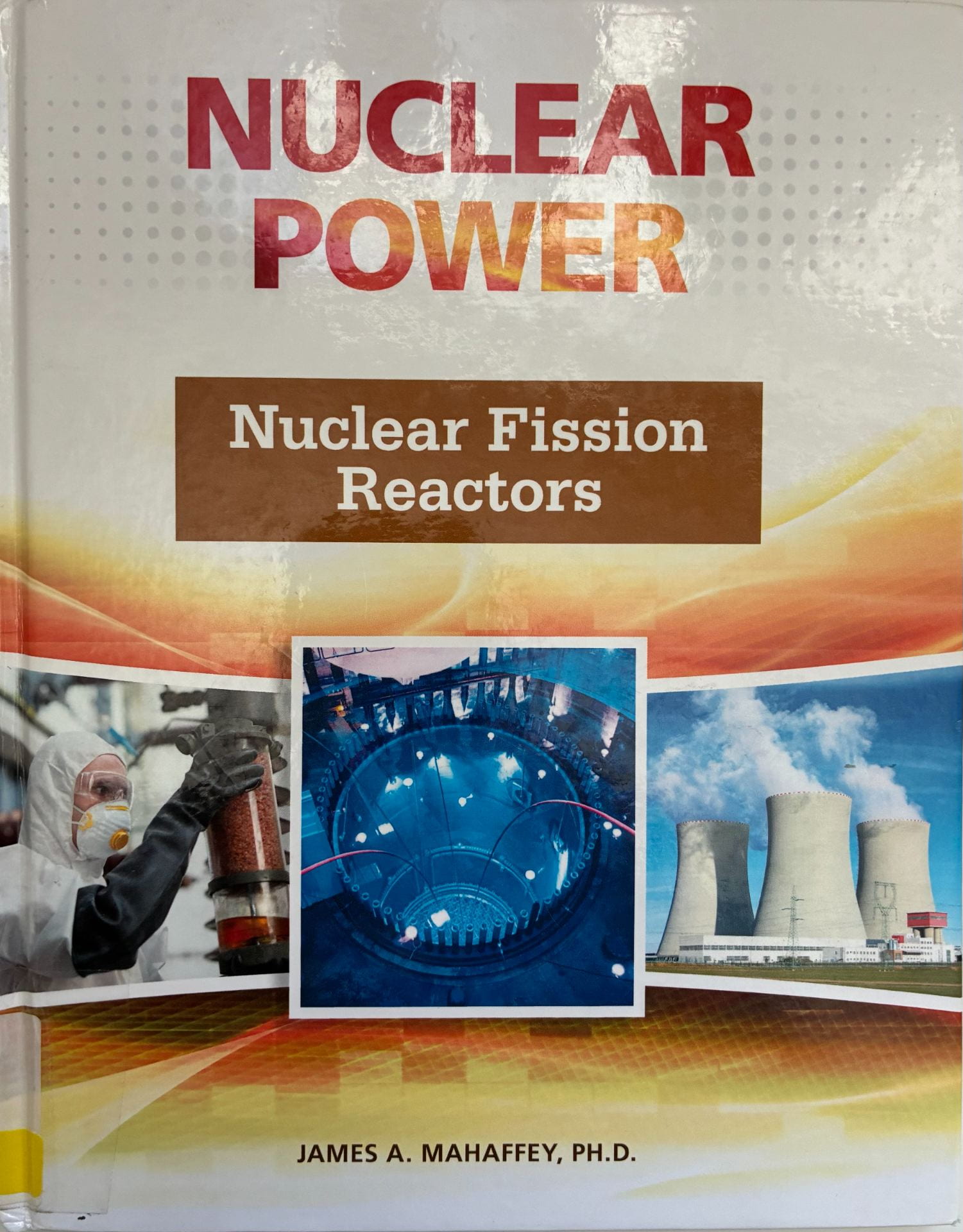
To face climate change and to diversify our energy needs, it is important to be informed about other types of energy like nuclear power. This book, written by a nuclear scientist, is really very detailed and written so that a well versed 8 -12 year old with the proper background knowledge could read it. It explains every part of a nuclear fission reactor. It is an excellent read if you want to know the minute details of how a nuclear reactor works.

This is a fascinating and important read. Climate change is not always on people’s minds but all the countries in the world need to work together to solve this problem for our own survival. Many ideas have been put forward to solve it. This is the book on which the documentary Nuclear Now was based, which I discussed in my previous post. The documentary was excellent in providing information and making us see all the infrastructures that were discussed. The book includes a more vivid mathematical viewpoint in addition to science. For example, China alone, in just 5 years (2001-2006) DOUBLED its already huge coal consumption. For their credit Chine has started to introduce many types of nuclear reactors on their territory to start to replace coal. China is the biggest emitter of CO2.
Climate change is already here with rising sea level, more frequent large hurricanes, more floods and droughts, wildfires, and record heat waves. What matters most right now is how fast the world can accomplish atmospheric decarbonization in the next 2 decades.
There are two kinds of changes that could happen. First is climate change, which is ‘inconvenient’ and expensive. The second is potential tipping points that cause truly catastrophic shifts that are irreversible. As of right now, the world is falling short of what is needed to address these problems. What we do in the next 10 years to peak and rapidly reduce emissions determines what happens in the second half of the century.
He discusses how Sweden did an amazing job, and in opposition what Germany did.
Hydropower is excellent but most of the prime sites have already been dammed. As a result, hydropower will not scale up as quickly in the way we need now to solve climate change. Hydropower production is becoming unstable as climate changes because drought one year becomes deluge the next.
People fear nuclear energy. He discusses all the major arguments and how, after 50 years of exemplary nuclear energy has been safe and efficient.
I am not sure why some important details of the accident of Fukushima disaster were not discussed. Fukushima was not a nuclear reactor problem. It happened as a result of the third biggest earthquake ever recorded in history. It was not a reactor problem, it was an earthquake. The Onagawa nuclear power plant was closest to the epicenter of the earthquake and stayed intact. It actually saved 300 people from the eathquake. Its high sea wall (46 feet) prevented flooding. Fukushima had a sea wall only of 20 feet. Nobody was killed by the radiation. Elsewhere, the tsunami killed 18,000 people, injured many more and caused hundreds of billions of dollars in damage. Five years later, all we hear is the Fukushima ‘nuclear disaster’.
Chernobyl did not have a containment structure. It was a bad design. Three Miles Island had an accident but the containment structure worked. This important fact was lost in the wave of panic.
In 16000 reactor-years, we had one serious accident in USSR, 1 Japanese ‘disaster’ and 1 American accident.
Coal has a terrible safety record. Tens of missions of people died from coal and a few thousand from nuclear power.
People say that nuclear power is too dangerous. Ask compared to what? Compared to coal, the world’s dominant and fastest growing fuel, the leading cause of climate change, the fuel that kills a million people a year. Compared to THAT.
There’s discussion of handling nuclear waste, preventing proliferation, keeping the nuclear reactors we have, next generation nuclear reactors.
I am not doing justice to this book which is excellent and well researched. He does give examples of countries that did really well, and Ontario is included here.

Nuclear Now is a truly fascinating and needed documentary. It is truly excellent. It is based on the book Bright Future by Joshua S Goldstein. Oliver Stone shows how some countries have solved climate change. They all need to use nuclear energy. It was very nice to see all the locations as he discusses nuclear reactors, locations not many people can go. He goes through the history of nuclear. How people got scared of it. Anti-nuclear movements that happened as a result of accidents. If put in perspective, those accidents did very little compared to other much bigger accidents that happened.
He gives the very interesting example of Germany who wanted to invest in renewable energy and got rid of their nuclear plants. Renewables usually have been used on top of fossil fuels, not replacing them. The proportion of energy has not changed. They have spent more than $200 million on renewables since 2013 but within Europe, they have the highest electricity prices and their CO2 emissions are the highest. They still have to use coal.
Russia is a leader in nuclear energy. They already have small modular reactors. They are exporting their technology. Their most ambitious project is the fast breather reactor, close to the URAL mountains. It is the only large scale fast nuclear reactor in the world. In a conventional reactor, the uranium degrades. With a fast-neutron reactor, the uranium becomes higher and higher grade. You can recycle the same fuel multiple times. It’s called ROSATOM. – Beloyardsk nuclear power plant. No one knows yet if it will be cheap enough to standardize and be the complete breakthrough technology.
He mentions also fusion, with the ITER project, General Fusion and others who could power the world of the future, maybe even in the second half of this century.
The documentary is meant to bring forward the huge problem the earth is facing, climate change, and the solution, nuclear energy. It is uplifting and encouraging.

Le livre pose 100 questions à propos du nucléaire dans les grands sujets suivants: généralités, les réacteurs nucléaires, la sureté nucléaire, le cycle du combustible nucléaire, nucléaire civil ou militaire, la gestion des déchets nucléaires, l’environnement, les accidents nucléaires, l’international, le nucléaire dans le paysage énergétique, nucléaire et société, le futur de l’énergie nucléaire. Il y a beaucoup d’énergie nucléaire en France (70% contre 10% dans le monde), dont le contexte est Francais. Je vais soulever seulement les points qui m’intéresse le plus de ces 100 questions et pour les touts-petits.
-La radioactivité naturelle des roches est l’un des paramètres expliquant la température élevée régnant au centre de la Terre.
-L’énergie nucléaire sert à produire l’électricité mais aussi alimente les procédés de dessalement de l’eau de mer, la propulsion des navires, armement nucléaire, les usages médicaux et générer de la chaleur.
-Il y a plusieurs générations de réacteurs nucléaires. A chaque génération, on renforce la sureté, en fonctionnement normal et en situation accidenelle. On doit prévenir l’apparition et à limiter les conséquences de défaillances techniques, humaines et organisationelles pouvant conduire à des indicents ou des accidents.
-La sureté nucléaire dépend des connaissances scientifiques et techniques, ainsi que du retour d’expérience international de l’exploitation des installations nucléaires.
-L’échelle INES comporte 8 niveaux, de 0 à 7 (accident grave entrainant des rejets majeurs ayant des effets considérables sur la santé et l’environnement. L’accident de Tchernobyl en 1986, et Fukushima en 2011 étaient de niveau 7. Three Mile Island en 1979 était de niveau 5.
– Il est physiquement impossible qu’un réacteur nucléaire explose du fait de la faible concentration de carburant dans le coeur du réacteur, contrairement à la bombe nucléaire. Leur design est différent car dans une bombe, l’objectif est de relacher le plus d’énergie possible dans le laps de temps le plus court possible.
– On donne des autorisations d’exploitation des centrales que pour 10 ans (en France) par la suite on doit améliorer le niveau de sureté en tenant compte de l’amélioration des connaissances au niveau national et international. Tout peut etre remplacé à l’exception de la cuve du réacteur. L’age de la centrale de constitue pas d’indication de son niveau de sureté.
-Qu’est-ce que l’uranium? Comment extrait-on l’uranium? Cigar Lake au Saskatchewan est l’un des gisements d’uranium les plus concentrés du monde. L’uranium y constinue près de 11% de la masse de la roche. On utilise 3 méthodes d’extraction, les mines à ciel ouvert et souterraines, la lixiviation in situ et la coextraction. Le Canada est en seconde position au monde pour des ressources exceptionnelles en Uranium, après l’Australie. Le Canada produit en ce moment 8% de la production mondiale. On pourrait tenir 130 ans avec le niveau de demande actuel. (Le monde consomme environ 60 000 tonnes d’uranium par an)
-Il serait possible de récupérer l’uranium dissous dans l’eau des mers et océans. Mais c’est complexe et nécessite de manipuler de très grandes quantités d’eau de mer.
– On pourrait développer des réacteurs dit à neutrons rapides qui permettent d’exraire près de 100 fois plus d’énergie d’une quantité donnée de minerai d’uranium que les technologies actuelles dites à neutrons thermiques. La France a maitrisé ce type de réacteur par le passé avec les réacteur Rapsodie, Phénix et Superphénix. Avec les réacteur à neutrons rapides, on pourrait assurer plus de 6000 ans de production d’électricité. (A rechercher)
-Le combustible à l’uranium reste 3 ou 4 ans en réacteur avant d’etre déchargé.
-L,entreposage désigne le fait de placer des matière ou déchets à titre temporaire. Le stockage désigne le fait de placer des déchets dans une installation de facon potentiellement définitive.
-L’immersion en mer des déchets est interdite depuis 1994.
-Le stockage géologique profond doit requérir aucune maintenance ni surveillance une fois celui-ci scellé, et éviter autant que possible les risques d’intrusion volontaire ou accidentelle futurs. La stratégies du stockage géologique profond fait consenses au niveau international.
-De nombreaux défies et limites freinent le déploiment des réacteurs de génération 4. L’acceptation du public (déchets et risques d’accidents) et la capacité des pays à financer la construction de réacteurs, le manque d’expérience et de compétences de certains pays, la perte de savoir-faire industriel et la complexité croissante des réacteurs liée au renforcement des exigences de sureté.
-Une vingtaine de pays ont appelé en 2023 à tripler les capacités de l’énergie nucléaire dans le monde d’ici à 2050 à l’occasion de la COP28.
-Les réacteurs à neutrons rapides permettent une bien meilleure exploitatin du combustible and faisant fissionner tous les noyaux de plutonium to non pas uniquement les isotopes impairs. Cela permet d’extraire jusqu’à 100 fois plus d’énergie. Ils sont plus complexes et il serait peu probable qu’ils se déploient à large échelle avant quelques décennies.
-La prolongation d’exploitation des réacteurs existants est l’option la moins couteuse par MWh. Produire de l’électricité grace à de nouveaux réacteurs de génération III est plus couteux que de prolonger des réacteurs de gén.ration II. C’est également plus couteux que l’électricité solaire et éolienne mais moins que l’électricité d’origine fossile. Le nucléaire reste compétitif, y compris les nouveaux réacteurs de générarion III.
-Avec l’aggravation rapide du réchauffement climatique, de nouveaux mouvements environnementaux neutres ou favorable à l’énergie nucléaire voient cependant le jour depuis quelques années.
-Les petits réacteurs modulaires (Small modular reactors) sont de réacteurs de 3e génération de faible à moyenne puissance. Il s’agit de réacteurs à eau pressurisé ou bien de réacteurs à eau bouillante. Les composantes majeurs de ces réacteurs (cuve, échangeurs) peuvent etre fabriqués en série et transportés sous forme de modules pour un assemblage final sur le site de la centrale. La modularité de ces concepts permet de monter en puissance progressivement par installation successive de réacteurs pour atteindre la puissance requise. Les réalisations concrètes de Small Modular Reactor restent encore peu nombreuses au niveau mondial.
Google’s Demis Hassabis, and Anthropic’s Dario Amodei debate the World After AGI.
https://www.youtube.com/watch?v=02YLwsCKUww
We see here two representatives of AI companies: Gemini and Claude discussing together.
Amodei seems to think that AGI will be available in 2026-2027. Hassabis thinks that there is a 50% chance it will be available by the end of the decade.
It is easier to develop a good model with coding or math. It is easier to automate. With natural science like physics, it is more difficult as theories may need to be tested experimentally. It takes longer. There are missing capabilities at the moment, coming up with hypotheses or theory in the first place. it is much harder. It is the highest level of creativity.
How do we get through this without destroying ourselves, ie. Jobs will be gone in 1 to 5 years. Hassabis thinks more meaningful jobs will get created.
There is a slow down in hiring junior jobs. Hassabis suggested that there are amazing creative tools for everyone free of charge. Get proficient with these tools.
When AGI arrives, it is a different question. There are bigger questions.
We need to distribute wealth more fairly. We need to find meaning/purpose from our job.
Exploring the stars, is a purpose.
Big ideas, cure diseases, come up with new energy sources. We need more Alphafold that makes good in the world.
There was a discussion of not selling American chips (Nvdia H200) to China. Amodei thinks it is a big risk to national security.
Companies need to work with each other to minimise risks. They test AI. They look inside its brain to see how it does what it does. They document the model as they emerge. If companies build them poorly, if there are no guard rails, there will be risks going on. The up side is solving the ultimate tool for science and understanding the universe around us. If we can have all the best minds collaborating on all these problems, we can solve the risk problem. If there is no collaboration, that increases the risk problem. It is much harder to make sure the products are technically safe.
From the World Economic Forum – Annual Meeting in Davos 2026.
This link has an interesting talk about nuclear power. Isabelle Boemeke is a nuclear energy influencer. I liked that she tried to clear up misconceptions about nuclear energy. Using memes (with Isodope) is also interesting. Some misconceptions:
1- The anti-nuclear movement of the 1970s was driven by a fear of nuclear weapons. The logic being that bombs are bad therefore nuclear energy is bad.
2- We need clean energy that works 24/7 but we say ‘meh’ to nuclear energy as we have heard of Chernobyl. She shows stats that coal, oil natural gas and biomass create a lot more death from accidents and air pollution than nuclear energy. Coal, oil, natural gas and biomass has a lot of greenhouse gas emission but not nuclear energy, wind or solar. Nuclear power has the lowest life cycle emissions of all energy sources.
3- Nuclear power is significantly safer than fossil fuels. People have a wrong idea of what nuclear waste looks like.
4- It’s too slow to build. It takes 10 years to build and can provide electricity for 80 years.
5- Nuclear power is too expensive – Too expensive to save the future of our species? We can make it cheaper with small modular reactor.
6- The idea that nuclear is bad is costing us our future. Nuclear is cool.